
David Byrne, 2017
I am not a musically inclined person. I am tone deaf and cannot carry a note. I can’t even clap to a beat. With that in mind, I approached David Byrne’s How Music Works apprehensively. I was certainly attracted by the book’s cover design with its creamsicle-orange pebbly vinyl texture and simple raised text. Plus, David Byrne!
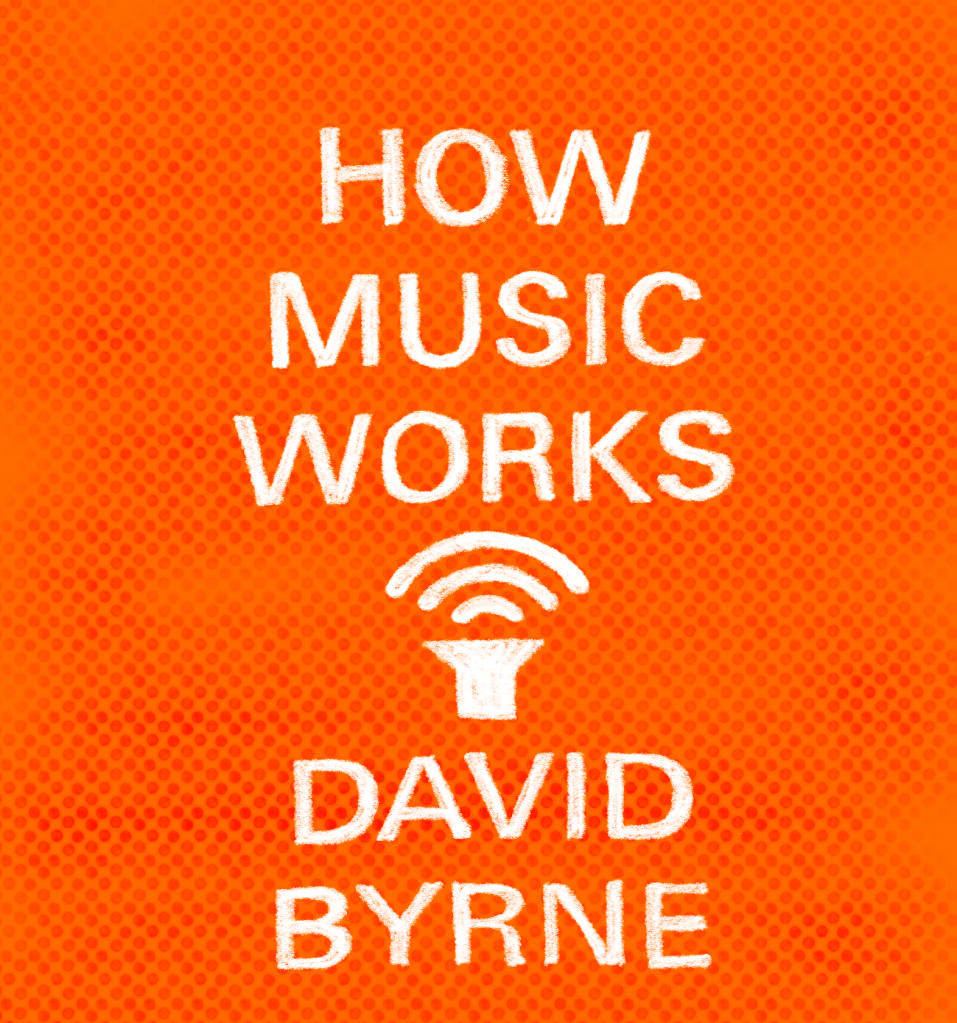
A collection of essays at times informative, autobiographical, and anecdotal, the book is broken into cohesive chapters that can be read in any order. Chapters include discussions on how technology informs music, how creating and experiencing music can be tethered to a physical space, and how record deals work. The conversational tone Byrne employs invites the reader to learn more about music without being overly didactic, similar to the tone used in A History of Pictures by David Hockney and Martin Gayford, in which the authors discuss how paintings and drawings have changed (or not) over time.
Fans of the Talking Heads’ film Stop Making Sense will really enjoy chapter two, “My Life in Performance”. In addition to his overarching music career, Byrne details how the stage performance and film for Stop Making Sense came together. The only chapter I had difficulty understanding was the final chapter, “Harmonia Mundi”, in which Byrne lays down the fundamentals of music theory before delving into the deep end of music’s primacy and cosmology. Still, it was a fun chapter to read, but whoah!
If you like the Talking Heads and want to learn more about music from David Byrne’s perspective, then you will enjoy How Music Works.
 stackofokcats